


Emotion Figures – Your Key to Vivid Visualization

Achieve a big impact with just a few strokes:
Learn how to draw figures that make emotions and interactions visible. Simple, systematic, and immediately applicable.

SHARE ARTICLE

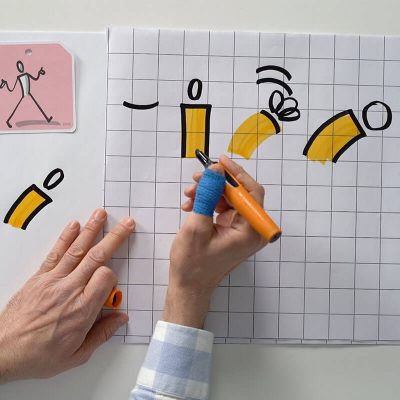
Imagine you’re sitting in a workshop. The topic remains vague, the flipcharts are full of text—no one is paying attention. Then the trainer picks up a marker and, with just a few strokes, draws a small figure smiling and raising a hand. Instantly, all eyes turn to the front.

Add a well-chosen title next to the drawing, and suddenly—simultaneously with the spoken word—meaning emerges on a visual level. Hand-drawn figures are wonderful at conveying this meaning, and the atmosphere shifts from bored to engaged.

lachender Teilnehmer
FIG-1c.jpg

Our brain responds immediately when we recognize other people.

Studies show that mirror neurons are activated in these moments, allowing us to intuitively empathize with actions and emotions. That’s exactly what happens when hand-drawn emotion figures are used—they create a sense of closeness, increase attention, and make content tangible. They give your visualizations an engaging, human touch.

In our trainings, you’ll learn step by step how to draw figures and make emotions visible—no artistic talent required.

If you want to take your visualizations to the next level, here you’ll find inspiring ways to dive deeper into visual storytelling.

WEITERE ARTIKEL ZU DIESEM THEMA

Auch interessant

Frank, Jennie and Melanie

New bikablo trainers in North America

It’s been eight years since we started explorting the North American visualization market. Jill Greenbaum and Jill Langer have made great progress in the US and Canada and we are grateful for all the work they did in the name of bikablo. Time flies and priorities shift, hence we ran a train-the-trainer program in New York just a couple of weeks ago and we now have new trainers and new energy with Melanie Taljaard and Jennie Hempstead.