
Visualization as a tool for dialogue in conflict regions
My name is Ziépégué, and I am a programme manager for the NGO Resilience for Peace in the Folon region, located in north-western Côte d’Ivoire on the border with Mali. I support local villages in improving how they manage conflicts and, above all, in preventing armed non-state groups from the Sahel region from gaining a foothold in their area. In the following blog post, I describe how I use visualisation in my work with village communities and why I strap my flip chart to my motorcycle.
SHARE ARTICLE
I discovered visualisation through my colleague Mirko, one of many bikablo global trainers worldwide. Fascinated by the power of visualisation to foster mutual understanding between people, I also began experimenting with visual approaches in the implementation of my project activities. I have always enjoyed drawing for pleasure, but with the bikablo technique, drawing has become much easier and has evolved into a real dialogue tool.
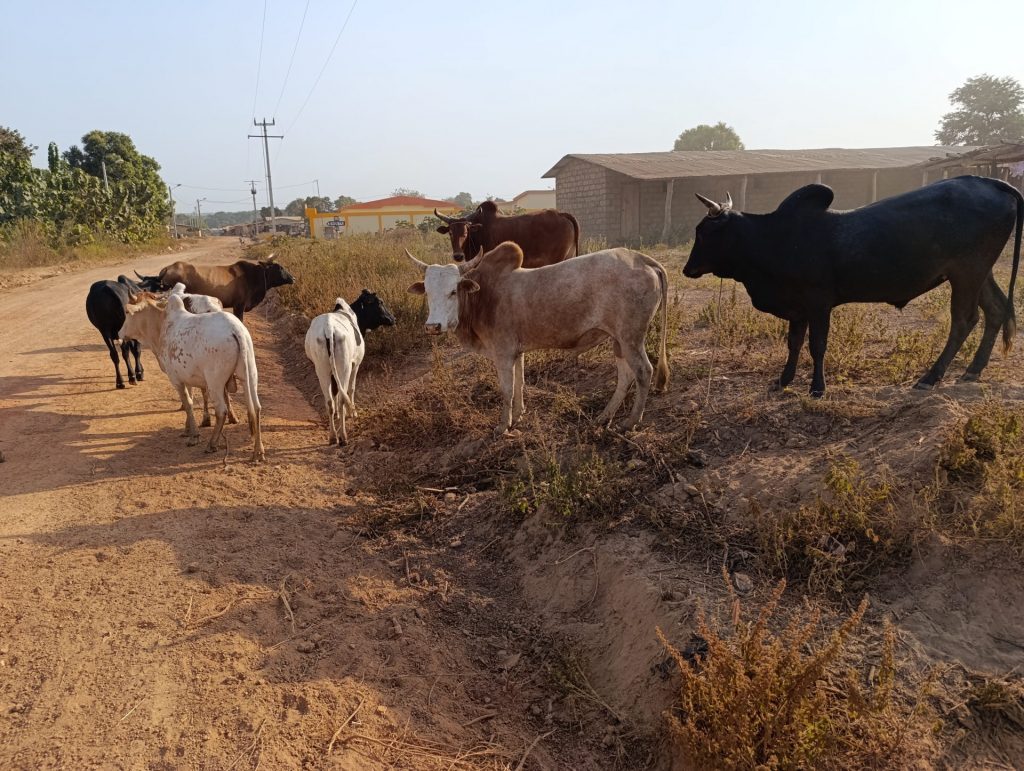
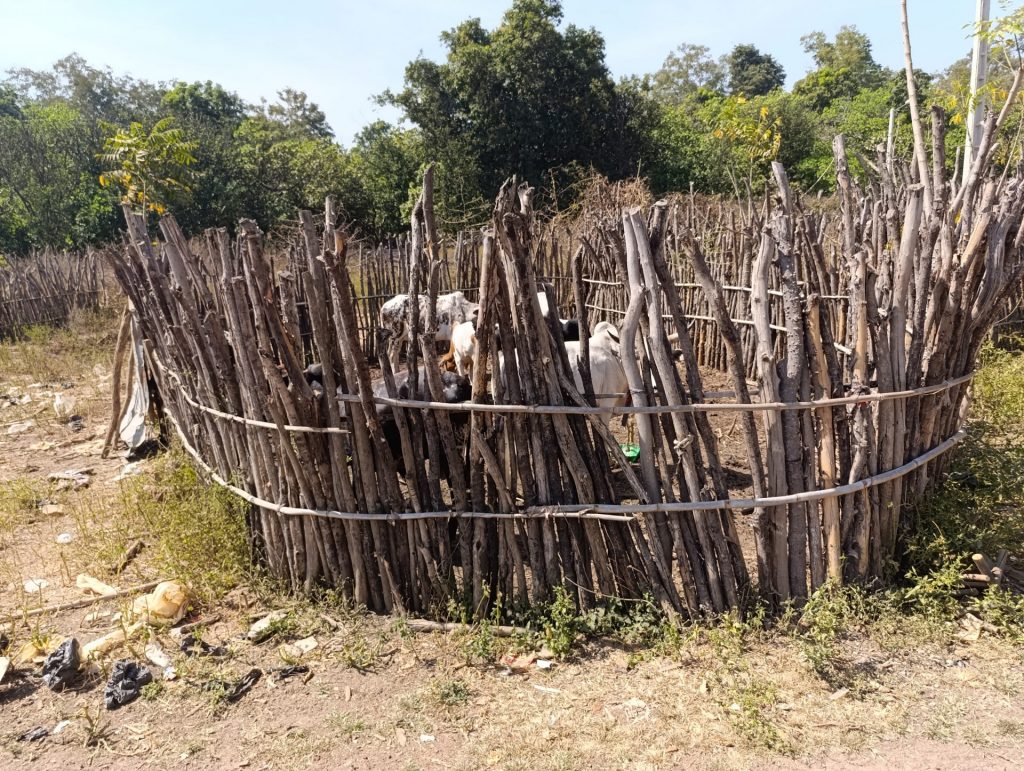
One major problem for the village communities in Folon, for example, is that their cattle—which are vital to their livelihoods—are stolen at night or wander into other areas in search of food. As Resilience for Peace, we agreed with local authorities and community leaders to support the residents of the village of Tiéfinzo, located about 15 kilometres from the Malian border, in building a night enclosure for their cattle. In such an enclosure, roaming cattle are fenced in at night, preventing them from straying into nearby fields and damaging crops or being stolen.
A recurring challenge in projects like this is the low literacy rate, which makes it harder for villagers to understand and accept certain initiatives like ours—only 2 out of 10 residents can read and write
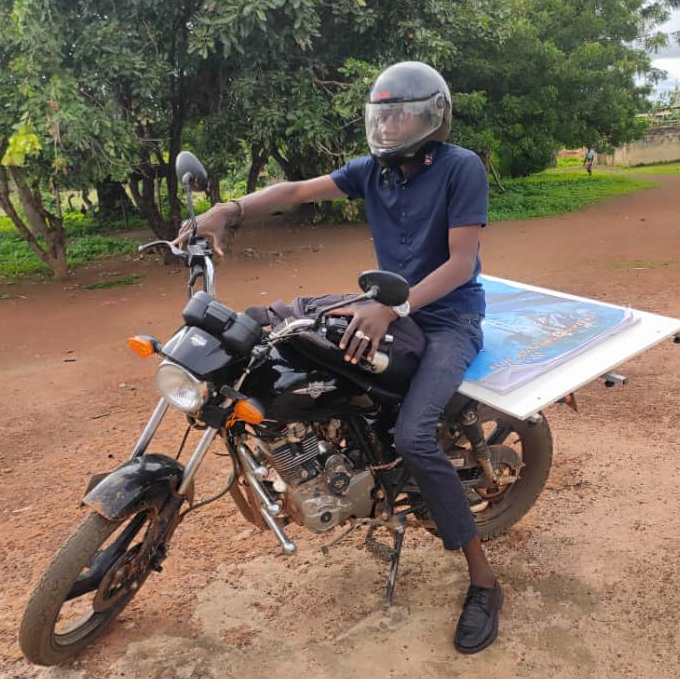
Aware of the need for an appropriate dialogue format, I decided to use visualisation techniques in the hope that this would have a positive impact on acceptance among the residents of Tiéfinzo. However, I faced a problem: visual facilitation in front of a group requires large sheets of paper and a stable flip-chart stand. I had to travel about ten kilometres on unpaved sandy roads to Tiéfinzo with this bulky flip chart—using the only available means of transport: my motorcycle. Since its luggage rack was not suitable for carrying a flip chart, I took a risk and simply sat on part of it (see photo).
Once I arrived safely in Tiéfinzo, I used visual aids to explain how a night cattle enclosure could improve community cohesion. My visual story went as follows:
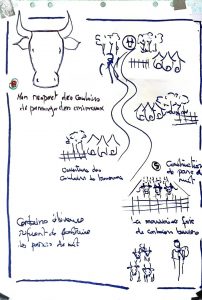
In village X, there is no night enclosure for cattle, so freely roaming animals cause damage to fields at night. In response, farmers kill the animals they find with machetes because they are tired of losing their harvests and receiving no compensation. By contrast, the people in village Y built a night cattle enclosure and lived in greater harmony, with fewer conflicts over cattle.
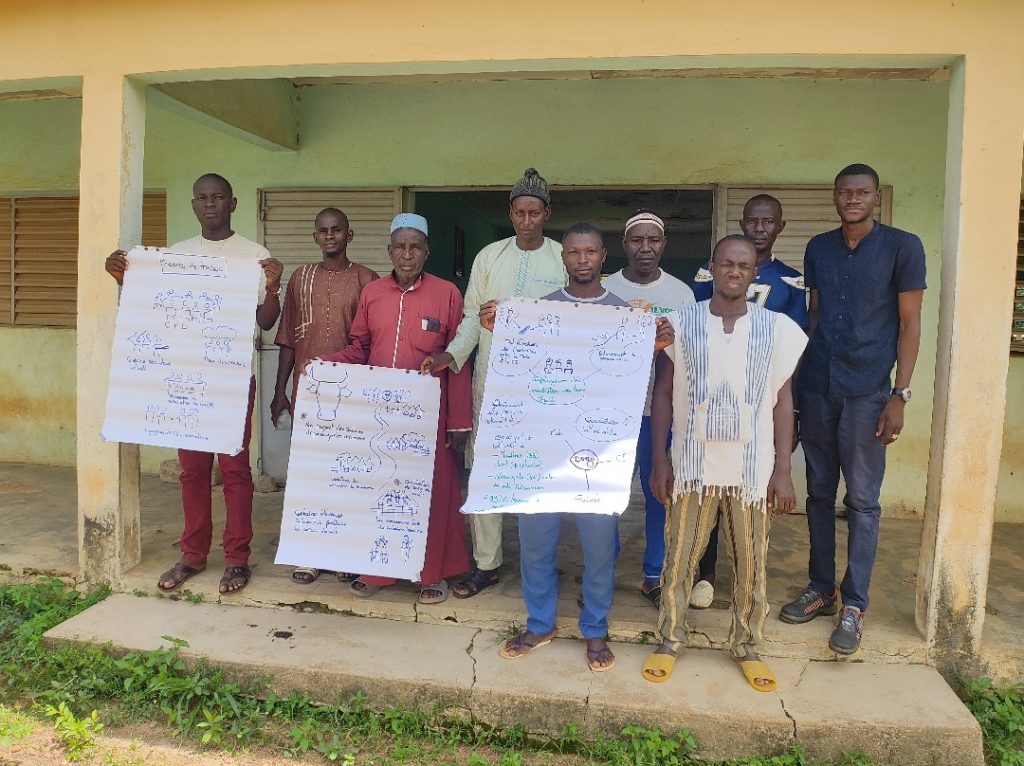
Next, I created an explanatory visualisation to describe the construction process, the site layout, and how the enclosure functions. Inspired by the visuals, those present asked me questions about the practical use of the enclosure and even pointed out specific ways to improve my visualisation of the construction and site plan.
Through my visual stories and explanations, a lack of understanding was transformed into curious collaboration. The daring motorcycle journey paid off—the visualisation and the flip chart helped me gain the full approval of the village community for my initiative and their active participation in the planning process.
Encouraged by the success of my visualisations, I took them to other remote border villages, where we enabled the construction of additional night cattle enclosures. Always with me: my flip chart on the back of my motorcycle.
You Might Also Be Interested In...

Final bikablo meetup 2025
Last year, we came together for an international meetup with a simple but joyful idea: to draw together.
We offered four different group sessions, each one just as popular as the next. Thanks to four talented trainers from four different countries, every session was guided with its own unique perspective, making the experience as diverse as it was inspiring.

IPEVO P2V-Ultra: The flexible document camera for any situation
The IPEVO P2V-Ultra delivers razor-sharp images, is versatile in its use, and works immediately via plug-and-play. An all-rounder for working in virtual environments and for

Pencil Selling: How visual thinking changes the way we sell complex services
Ever tried to explain something over the phone that felt almost impossible to describe with just words?
At bikablo, we believe in enabling people to think with the pen—even in banking, insurance, or tech. In situations where people need to explain complex products or services, a quick sketch—on a tablet or paper—can make all the difference.